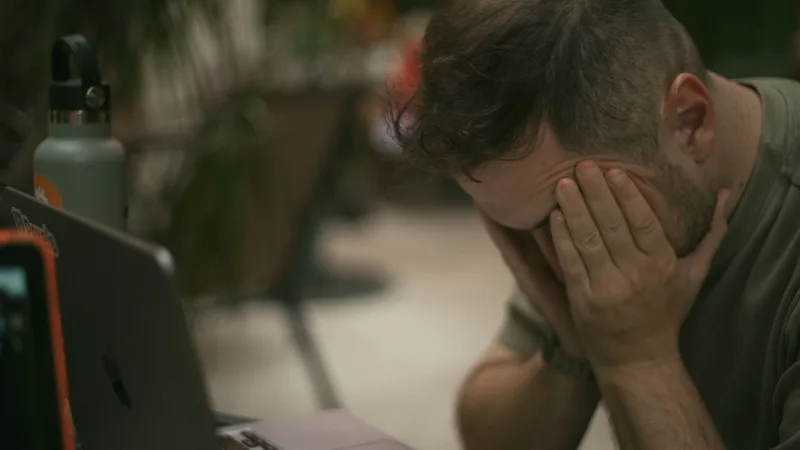
It starts with the dishes. Or a purchase you did not discuss. Or the feeling that your partner has time for everyone except you. Before long, you are having the same argument day after day, with both of you trying to explain yourselves and neither of you feeling heard.
Sometimes, there is no argument at all. You handle the bills, coordinate schedules, and get through the day. But you miss feeling close and connected. You might wonder,
“Is this just what happens in a long relationship?”
These are conversations worth having. You do not need to have everything figured out before asking for help. You do not have to wait until the relationship is in crisis. You can seek counseling for these concerns before they become a crisis (Cleveland Clinic, 2026).
If any of this feels familiar, couples therapy can help you understand what keeps getting in the way of connection and begin working through it together.
What is couples therapy?
Couples therapy is a form of talk therapy in which partners work with a trained clinician to address relationship concerns. It can help you understand how you communicate, respond to stress, and relate to one another. You do not have to be married to participate (Cleveland Clinic, 2022).
While there is no checklist that proves your relationship “needs” therapy, consider reaching out when you notice patterns such as these:
- The same disagreements keep returning. Conversations about money, chores, parenting, or family boundaries rarely lead to a workable agreement.
- It feels difficult to talk honestly. You expect criticism, become defensive, or avoid important subjects to keep the peace.
- You feel more like roommates than partners. Affection, friendship, or emotional and sexual connection have changed in ways that trouble one or both of you.
- Trust has been damaged. Infidelity, dishonesty, or broken agreements make it difficult to feel secure.
- A major transition is straining the relationship. Parenthood, illness, caregiving, grief, or another life change has disrupted how you connect.
- You are questioning your future together. You need help talking through whether and how the relationship can continue.
- Rehearsing a conversation all day and then deciding it is easier to say nothing.
- Keeping a mental list of disappointments with your partner.
How does couples therapy work?
Couples therapy is collaborative work, with room for both of your experiences. It is understandable to hope a therapist will finally help your partner see your point. Your partner may arrive hoping for the same thing. Couples therapy asks you to consider another question: “What happens between us that keeps leaving us both feeling so far apart?”
In couples therapy, the therapist helps both partners understand conflict patterns and develop more useful responses. Early sessions usually explore your relationship history, current concerns, and goals. Together, you identify changes that would matter in daily life—such as finishing a difficult conversation without insults or making decisions with less tension.
Couples therapy gives a safe space for both partners to be heard. Neither partner is labeled as “right” or “wrong.” Couples often remember the same conversation differently, and understanding your partner’s experience does not require abandoning your own.
Accountability also matters. One partner can say, “I felt dismissed,” while also acknowledging, “Calling you names was hurtful, and I need to change that behavior.” Listening to someone’s feelings does not mean agreeing with their interpretation or accepting their behavior.
When is couples therapy not appropriate?
In couples therapy, the term collaboration does not mean equal responsibility for harm. Threats, coercive control, or violence require a different response from an ordinary disagreement. Joint therapy can be unsafe in an abusive relationship. If you fear retaliation for speaking honestly, seek confidential individual support or contact the National Domestic Violence Hotline before pursuing sessions together (National Domestic Violence Hotline, n.d.).
How do we know if couples therapy is working?
When couples therapy is working, a familiar disagreement becomes a chance to repair. Repair means taking steps to address hurt and reconnect after a difficult interaction. It can include acknowledging your part, listening to the impact, and following through on a change.
Examples of Repair:
- “I should not have to ask you to help.” One partner feels responsible for noticing everything the household needs. The other feels that their contributions are overlooked. An argument about laundry becomes an argument about whether either person cares. Through therapy, the therapist can help each partner describe what they believe to be their workload, including planning and remembering, and explain what feels unfair. Repair might sound like, “I did not realize you were carrying all of that. I will take responsibility for the school emails, including the follow-up.” Repair happens when the couple makes specific agreements and sticks to them consistently: who handles school forms, who plans meals, and when you will check whether the arrangement is working.
- “You spend too much.” “You try to control everything.” For one partner, saving money may mean safety. For the other, having some freedom to spend may mean independence. Therapy can provide a place to explore those meanings alongside the practical numbers. Repair is creating a shared agreement about expenses that need discussion and money each person can use independently. The conversation becomes more specific: “What would help us both feel secure with this decision?”
- “You never talk to me.” “You never give me space.” One partner pushes harder for a conversation because distance feels frightening. The other pulls away because the intensity feels overwhelming. Each response makes the other person more upset.
- Repair happens when each partner recognizes the sequence earlier and practices a different response. Instead of disappearing or demanding an immediate answer, they might agree to pause and return at a specific time: “I want to hear you. I need a break to settle down, and I will come back.” The return matters as much as the pause.
Evidence-based therapeutic approaches
Therapists may use one approach or draw from several, depending on their training and your needs (Cleveland Clinic, 2022).
Emotionally focused couple therapy (EFCT or EFT) focuses on the emotional connection between partners. It helps couples recognize recurring patterns—such as pursuing a conversation while the other person withdraws—and understand the fears or unmet needs beneath them. The work supports clearer expressions of vulnerability and more responsive interactions. It may be useful when disconnection, difficulty trusting, or recurring emotional conflict is central to the relationship’s distress (International Centre for Excellence in Emotionally Focused Therapy, n.d.).
The Gottman Method emphasizes friendship, respect, managing conflict, and building shared meaning. Therapists assess the relationship and teach practical ways to approach disagreements and repair hurtful interactions. This approach addresses concerns such as criticism, emotional distance, and recurring conflict about everyday life. It also recognizes that some differences need ongoing understanding and management rather than a final resolution (The Gottman Institute, n.d.).
Integrative behavioral couple therapy (IBCT) combines acceptance with change. Partners explore how their differences, emotional sensitivities, and outside stress shape their interactions. They work on understanding each other while making concrete changes in communication and behavior. Acceptance here does not mean tolerating mistreatment. It means understanding a partner more fully while addressing patterns that cause distress (U.S. Department of Veterans Affairs, n.d.).
Frequently Asked Questions
What if my partner does not want to go?
If it feels safe to do so, explain what you hope to improve without presenting therapy as punishment: “I miss feeling close to you, and I would like help with how we talk.” You can invite your partner to discuss their concerns about therapy. If they decline, individual therapy can still offer support for your own feelings, boundaries, and decisions; it cannot do your partner’s work for them.
Will the therapist tell us to separate?
No. Therapy supports rebuilding your relationship or clarifying decisions about separation. Discuss your goals openly; reconciliation is not guaranteed (Cleveland Clinic, 2026).
How long does couples therapy take?
There is no single timeline. Your concerns, goals, and progress help guide the frequency and length of treatment. Ask your therapist what the initial assessment involves, how they measure progress, and when you will review whether the work is helping (The Gottman Institute, n.d.).
What should we ask before scheduling?
Ask about the therapist’s experience with your concerns, session format, fees, and any applicable coverage. It is also reasonable to ask how privacy, individual conversations, and information shared outside joint sessions are handled.
Does PAWC offer telehealth or in-person sessions?
Yes. In online therapy with a licensed clinician, you meet with a person through a remote platform. PAWC offers telehealth for patients physically located in California during their appointments (PAWC, n.d.-a).
How can PAWC help?
You do not have to wait for another painful argument to take the first step. Whether you want to rebuild closeness, work through a recurring disagreement, or understand what comes next, PAWC can help you explore options for couples therapy. Visit PAWC’s Find Your Provider page to connect with a clinician and ask about getting started with couples therapy.
Educational disclaimer: This article provides general educational information and is not a substitute for individualized assessment, diagnosis, or treatment by a qualified professional. Reading it does not establish a therapist–client relationship with the author or PAWC. Examples are fictional, treatment suitability varies, and outcomes are not guaranteed. Do not delay professional care because of information in this article. If you are in immediate danger, call 911 or your local emergency number. For confidential support concerning relationship abuse in the United States, contact the National Domestic Violence Hotline at 800-799-SAFE (7233) or visit https://www.thehotline.org/.
References
Cleveland Clinic. (2022, June 30). Psychotherapy. https://my.clevelandclinic.org/health/treatments/23445-psychotherapy
Cleveland Clinic. (2026, July 31). 6 benefits of marriage counseling (and why it sometimes doesn’t work). https://health.clevelandclinic.org/marriage-counseling
International Centre for Excellence in Emotionally Focused Therapy. (n.d.). Emotionally focused therapy for couples (EFCT). https://directory.iceeft.com/eft-for-couples
National Domestic Violence Hotline. (n.d.). Should I go to couples therapy with my abusive partner? https://www.thehotline.org/resources/should-i-go-to-couples-therapy-with-my-abusive-partner/
The Gottman Institute. (n.d.). The Gottman Method. https://www.gottman.com/about/the-gottman-method/
U.S. Department of Veterans Affairs. (n.d.). View the treatment process up close. https://www.mirecc.va.gov/MIRECC/visn19/treatmentworksforvets/relationship-distress/treatment-process.asp